
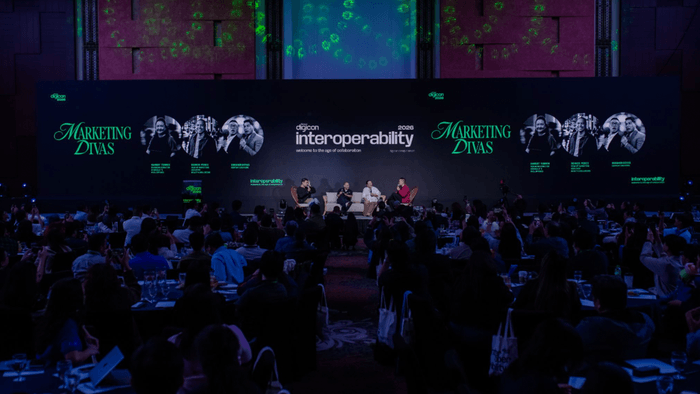

More than 2,000 leaders and professionals from the marketing, business, technology, and media sectors gathered at the Manila Marriott Hotel on October 15–16 for DigiCon 2026, a two-day convention highlighting the importance of collaboration in shaping the Philippines’ digital future.
Organized by the Digital Marketing Association of the Philippines (DMAP), this year’s convention carried the theme “Interoperability: Welcome to the Age of Collaboration,” encouraging industries to break down silos, connect their capabilities, and combine human creativity with emerging technologies to drive meaningful innovation. Throughout the event, speakers emphasized that digital transformation goes beyond adopting new tools. Building a more competitive and resilient digital economy requires stronger partnerships, shared knowledge, and the integration of people, ideas, and technology across industries.advertisement
DigiCon 2026 opened with remarks from convention Co-Chairs Shayne Madamba and Raymund Sison, alongside DMAP President Miko David, who highlighted the importance of interoperability in creating a more connected digital ecosystem.
Sison compared interoperability to the human body, describing how its different parts work together as one interconnected system. Madamba, meanwhile, pointed to the origins of large-scale digital interoperability, explaining how early systems were developed to ensure critical information could be shared rather than trapped within individual silos.
David emphasized that building a resilient digital economy requires industries to move beyond their individual strengths and work toward collective progress, positioning DigiCon 2026 as a platform for advancing a more collaborative and future-ready digital landscape.
The opening-day plenary featured Dr. Christian Busch, author of Connect the Dots and university professor, who discussed how leaders can encourage serendipity and innovation by challenging assumptions, recognizing unexpected connections, and creating environments where new ideas can flourish.
Other speakers explored developments across the digital landscape, including opportunities in the Philippine creative industries, media quality in the age of artificial intelligence, AI-powered business communications, connected commerce, and interoperability. Congressman Javi Benitez, DoubleVerify’s Tinee Cruz, Viber’s Cristina Constandache, The Trade Desk’s Sonal Patel, and Huawei’s Daniel Ouyang were among the featured speakers.
The program also brought together The Kool Pals, The Marketing Divas’ Dennis Perez of Unilever and Margot Torres of McDonald’s, and Dogshow Divas podcasters Macoy Dubs and Baus Rufo for a session combining marketing insights with humor.
DigiCon 2026 featured specialized tracks that examined how collaboration can create practical business value across technology, creativity, and digital transformation.
The Innovation Track, led by Gino Nacianceno, explored human-machine collaboration, responsible AI adoption, and the evolving relationship between technology and the workforce. Discussions brought together perspectives from industry leaders and experts representing organizations including TrueLogic, Hit Productions, QR Tiger, Globe Business, Summit Media, DITO CME Holdings, Rappler, and Michael Page.
Sessions also examined how businesses can build responsible AI cultures and navigate the technology’s implications for recruitment and organizational development.
Meanwhile, the Integrated Track, led by Co-Chair Shayne Madamba, focused on combining creativity, technology, and diverse perspectives to deliver stronger business outcomes.
Highlights included IMPACT BBDO’s Ali Rez on resistance as a driver of culture, EON President and COO Malyn Molina’s launch of the Philippine Trust Study, and a conversation between FEATR’s Erwan Heussaff and Republiq Group’s Bryan Yap on building culturally relevant businesses.
The track also featured a debate between the UP and Ateneo Debate Societies on whether AI could surpass human creativity, alongside discussions on inclusive marketing and human-AI collaboration.
The Interactive Track, led by Pat Del Castillo, focused on practical approaches to digital transformation. Sessions explored AI-driven search, interoperable digital marketing systems, and ways organizations can connect their digital capabilities more effectively.
On the convention’s second day, the plenary program continued to examine how collaboration can become a competitive advantage. Edelman Global Chief Creative Officer Judy John challenged leaders to rethink how ideas are developed, emphasizing the value of bringing different disciplines and perspectives together from the beginning. Thomas Kolster of Mr. Good Advertising also discussed how businesses can use collaboration to stand out in an increasingly interconnected marketplace.
A key highlight was the Next Monday panel, moderated by Madamba, which brought together David, 4As Chairman Ronald Barreiro, Advertising Standards Council Executive Director Robbie Aligada, and Public Relations Society of the Philippines President Ana Pista. The discussion centered on building a shared vision for greater collaboration across the industry.
Other plenary sessions explored evolving consumer behavior, audience engagement, platform discoverability, and strategies for turning digital interactions into meaningful consumer action. Google's Dr. Deborah Ko and Jellyfish's Alvin Cheang examined changing audience mindsets, while AdSpark CEO Manny Fernando discussed strategies for encouraging consumer action.
Representatives from Manila Broadcasting Company, including Santi Elizalde and Jeriko Taruc, joined 101.1 Yes FM’s Sexy Megan to discuss cross-platform discoverability.
The second day also featured specialized tracks demonstrating how interconnected thinking can improve customer experiences, strengthen creative partnerships, and support scalable digital solutions.
The Immersive Track, led by Denise Haak, explored the integration of digital and physical experiences to create more seamless customer journeys. Speakers representing Cebu Pacific, Ayala Land Hospitality, Iles Philippines, Pure Culture, AC Mobility, Inquiro, and Moving Walls shared insights into connected tourism, retail, mobility, and marketing.
Discussions also addressed challenges in financial services, with representatives from Tonik Bank, RS2, SwiftPay, UnionBank, IPV Network, Abe-Abe, and Reyes Tacandong & Co. contributing perspectives. Quark Henares of Lennon Group concluded the track with insights into storytelling in the streaming era.
The Impact Track, led by Jordan Santos in partnership with the ONE Asia Creative Awards, highlighted the role of creativity, communities, and cross-industry partnerships in building stronger brand connections.
Sessions explored human insight, cultural relevance, community-driven engagement, and fandoms, with contributions from Paulus Seoul’s Thomas Hongtack Kim, Ogilvy Singapore’s Nicolas Courant, and representatives of various brands and online communities.
Additional discussions covered collaborative brand building, AI-driven storytelling, and creative applications in gaming, featuring perspectives from organizations including Anker, Viber, Fenyx Digital, DITO Telecommunity, Moonton, and Co-Op Play.
The Interactive Track continued with practical applications of AI and digital systems. Emporia Group’s Art Policarpio discussed the use of AI agents in social content teams, while Not AI’s Nicolas Tessier explored how businesses can redesign marketing operations for the AI era.
Together, the sessions demonstrated how interoperability can move beyond theory and become a practical approach to creating connected customer experiences, more effective workflows, and stronger partnerships.
DigiCon 2026 concluded with a call for delegates to translate the insights gained during the two-day event into concrete initiatives and long-term industry partnerships.
In their closing remarks, Co-Chairs Shayne Madamba and Raymund Sison stressed that the value of the convention lies in how its lessons are applied beyond the conference halls.
Madamba thanked the event’s speakers, partners, and delegates while encouraging industry leaders to turn the principles of interoperability into meaningful action.
Sison likewise emphasized the need to sustain collaboration after the event, noting that stronger partnerships and the combined strengths of different industries can unlock opportunities for businesses and communities while helping build a more innovative and competitive Philippine digital economy.
Supported by sponsors, exhibitors, event partners, and media organizations, DigiCon 2026 brought together diverse voices from across the digital ecosystem to explore a shared vision for the future.
Ultimately, the convention reinforced a clear message: the next phase of digital transformation will depend not only on the technologies businesses adopt, but also on their ability to work together, connect capabilities, and turn collective ideas into lasting impact.
DigiCon is the Philippines’ premier digital marketing conference, organized by the Digital Marketing Association of the Philippines (DMAP). Since 2016, it has brought together the country’s decision-makers, brand marketers, creatives, creators, and technology leaders. It is recognized as one of the country’s biggest and most diverse digital marketing conferences.
The Digital Marketing Association of the Philippines (DMAP), formerly known as IMMAP, was established in 2007 as a collective voice for digital leaders shaping the future of Philippine digital marketing. With more than 300 member individuals and companies, the organization represents the interests of advertisers, agencies, online platforms, educators, media owners, and technology startups.